3,000+ yrs
of history on this coast
6+
surf breaks in one bay
Dec – Mar
humpback whale season
40 min
from Puerto Vallarta airport
A small peninsula with a very big reputation.
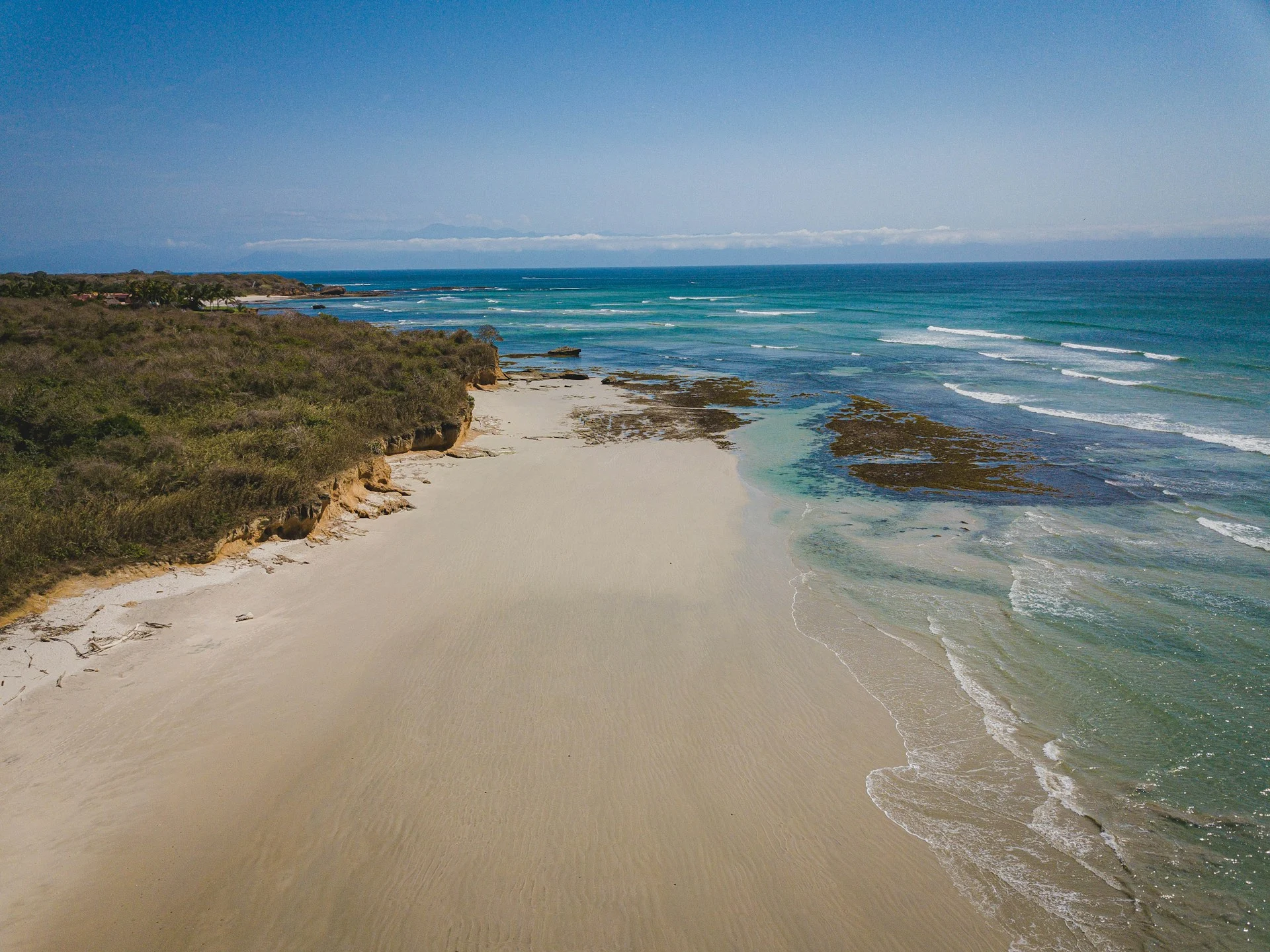
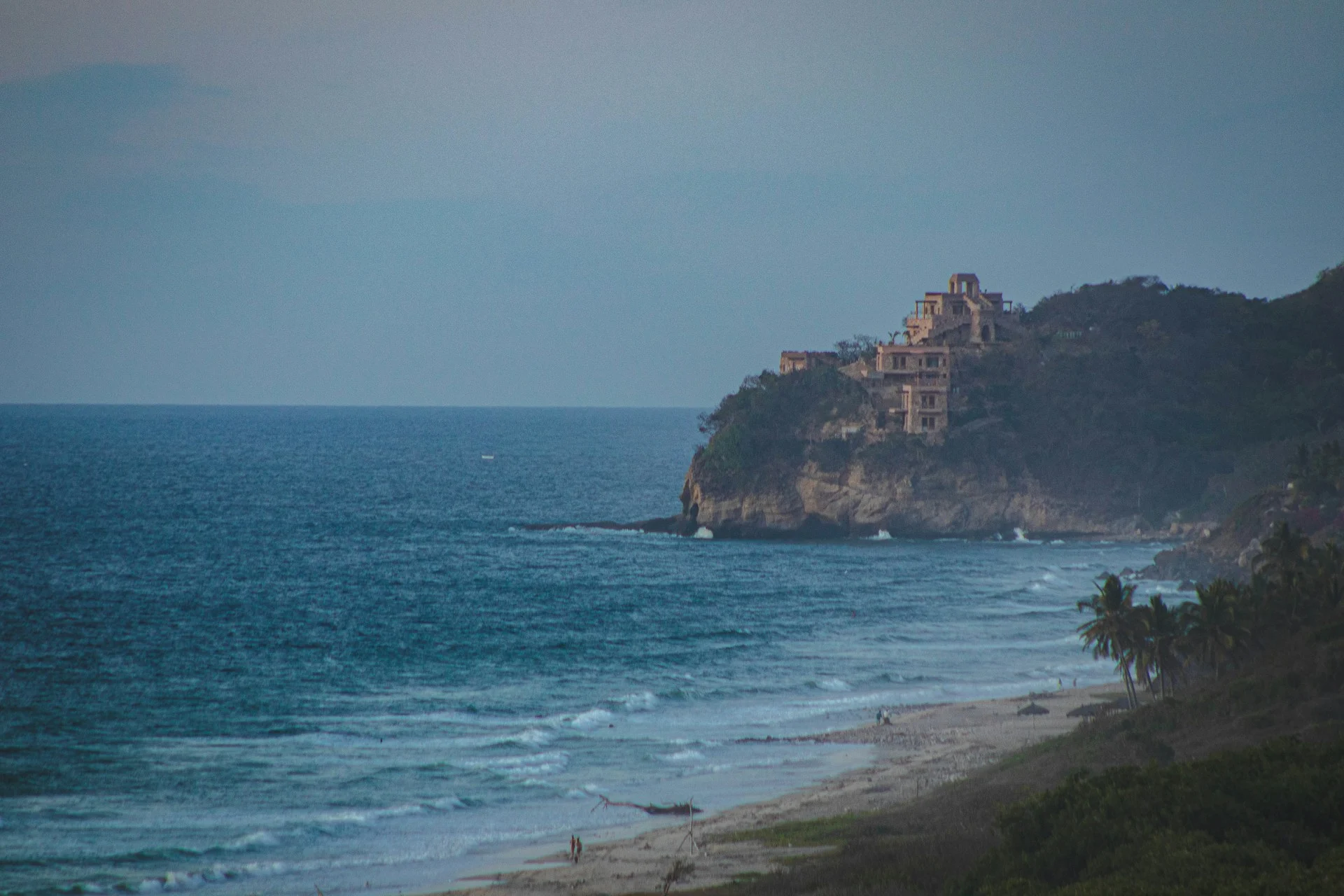
Punta de Mita sits at the northern tip of the Bahía de Banderas, where the Sierra Madre meets the Pacific and the water stays warm, clear and forgiving almost all year. It is really two places at once: the gated resort community most people picture when they hear the name, and Corral del Risco, the working fishing village next door where most of the people who actually run this coastline live, eat and raise their families. Tranquilo Surf calls the second one home. Five star resorts a few minutes from a real Mexican fishing town, that mix is part of what makes this place so easy to fall for, on a board or off one. Locals will tell you the best introduction to Punta de Mita is not a menu or a spa treatment, it is a morning on the water, watching the town wake up from a boat or a board while the fishermen head out for the day’s catch.
Older than it looks.
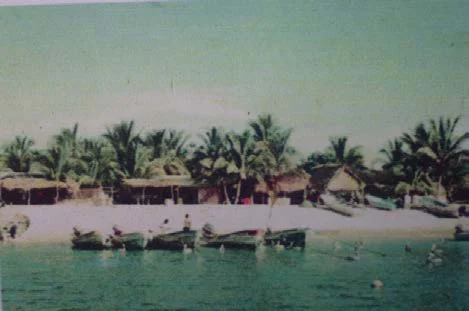
Long before Punta de Mita had a name recognizable to international travelers, it had one in Náhuatl, Punta de Mictlán, tied to a much older story about the underworld and the origin of people in this part of the world. Human presence around the Bahía de Banderas goes back roughly three thousand years, and the point where the Four Seasons now sits was once home to Tintoque, a settlement known for fishing, metalwork and pearl diving. Centuries later, after Spanish colonization folded the land into nearby haciendas and ejidos, the fishing village of Corral del Risco carried the tradition forward. In the 1970s, a federal trust reshaped the peninsula into the resort community known today, but the fishing families never left, they adapted, and they are the same ones now pointing visitors toward the best breaks, the best whale sightings and the best fish tacos in town.
~1000 BC
Tintoque
A fishing, metalwork and pearl diving settlement on the point.
Colonial era
Corral del Risco
A fishing village carries the tradition through the centuries.
1970s to today
Punta de Mita
Resorts arrive, but the fishing families, and the waves, stay the same.
— Why surfers keep coming back
One bay, six breaks, every level.
Punta de Mita’s real advantage is not one great wave, it is an entire peninsula of them, each one suited to a different level and a different mood. Winter, November through March, brings the most consistent groundswell and the cleanest conditions. Summer, April through October, fills in with smaller, softer surf that is perfect for beginners. Because the breaks wrap around the point in different directions, there is almost always somewhere rideable, whatever the wind is doing that day.
How Tranquilo Surf fits into all of this.
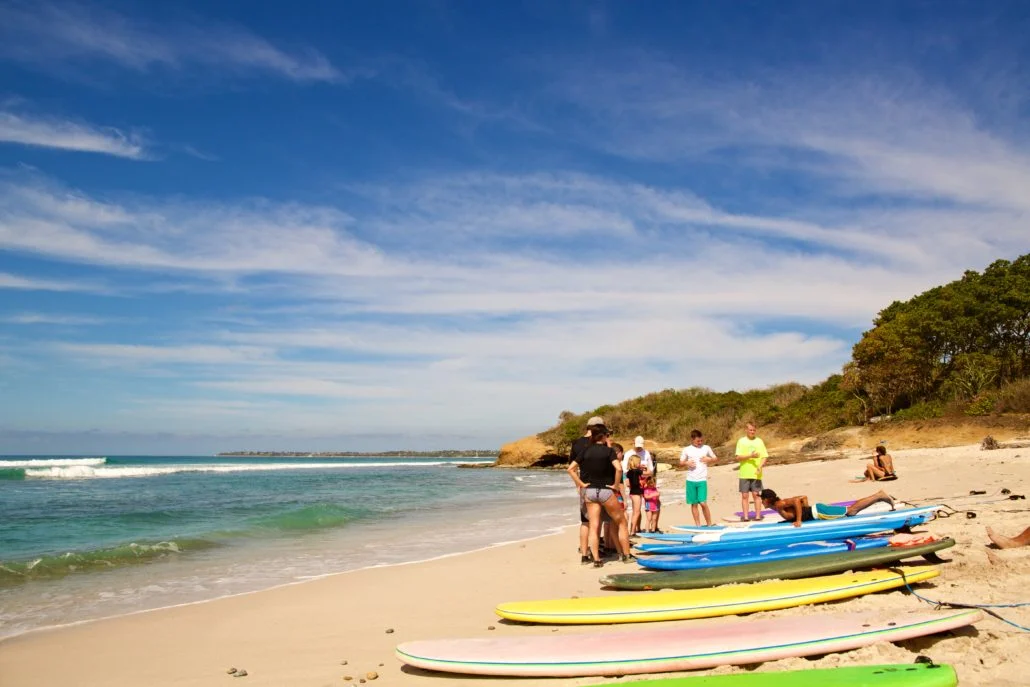
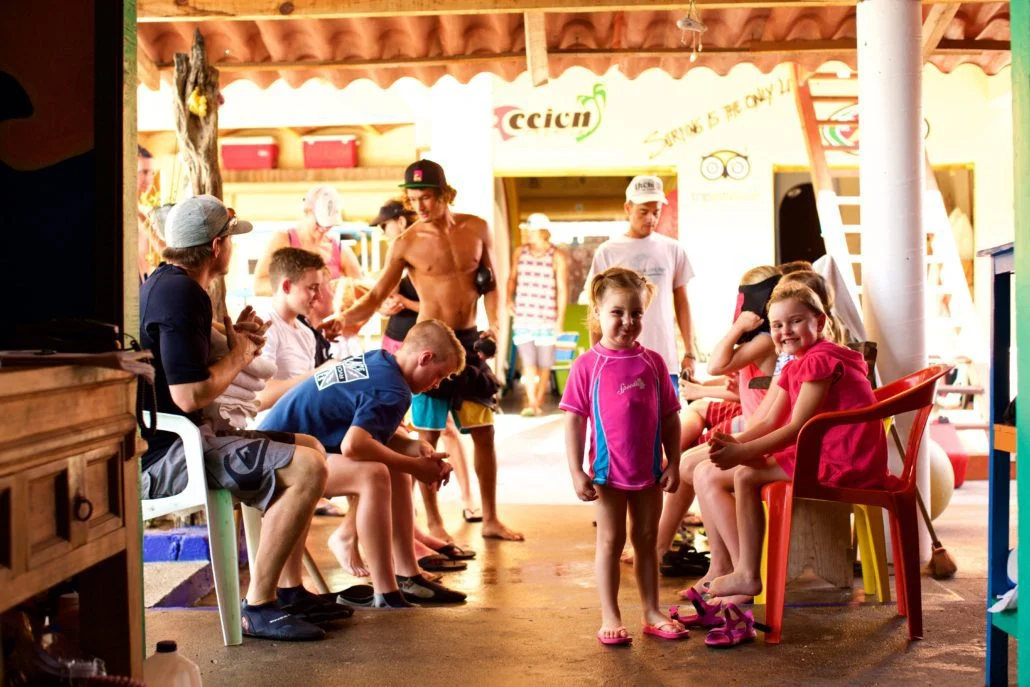
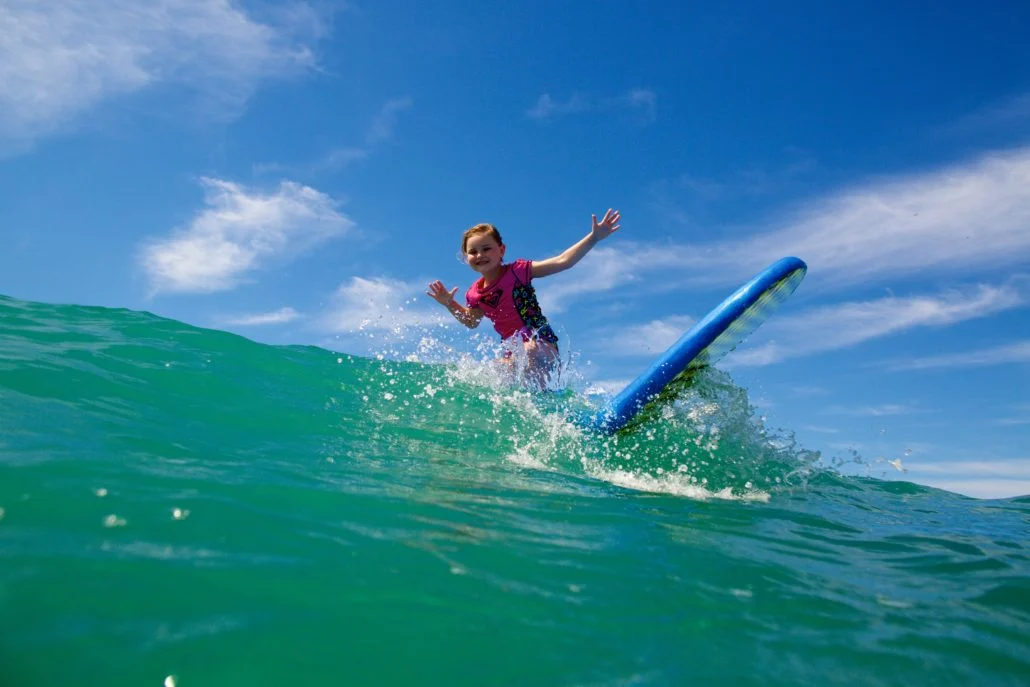
Every Tranquilo Surf tour is built around this same stretch of coast. Surf lessons, private, semi private or group, start at El Anclote, the same beginner break locals have used to teach their own kids for years. Once a student is ready to move past the basics, a Surf Guide trip pushes further down the point toward spots like La Lancha, matched to ability and the day’s conditions. Board Rentals mean experienced surfers can grab the right equipment and go explore on their own terms. Beyond the breaks, Whale Watching tours and trips out to the Marietas Islands use the same boats and the same local knowledge that make the surf tours work, because in Punta de Mita, the ocean is the ocean, whether you are standing on a board or leaning over the side of a panga.
Beyond the waves.
A short boat ride from Corral del Risco sits one of the Pacific’s more surprising landmarks, the Marietas Islands, a protected national park known for the hidden Playa del Amor and its resident blue footed boobies. From December through March, humpback whales pass close enough to hear, and a good captain can put a boat within respectful distance of a breach or two. None of it requires giving up a morning surf session, most ocean tours run in the afternoon, once the wind has already had its say on the waves. Add in the fresh seafood served right off the boats in Corral del Risco, and a single day here can cover a surf lesson, a wildlife tour and a proper Mexican meal without ever getting in a car.
— Quick answers
Planning your trip to Punta de Mita.
When is the best time to surf in Punta de Mita?
Winter, from November to March, brings the most consistent groundswell and the cleanest conditions. Summer, April to October, fills in with smaller, softer waves that are ideal for beginners.
Where do beginners learn to surf in Punta de Mita?
El Anclote is the classic beginner break, with a sandy bottom and a slow, forgiving wave. It is where most surf schools in town, including Tranquilo Surf, run their first lessons.
How far is Punta de Mita from Puerto Vallarta?
About 40 to 50 minutes by car from the Puerto Vallarta airport, along the coast road that hugs the Bahía de Banderas.
Is Punta de Mita worth visiting if you don't surf?
Yes. Whale watching from December through March, the Marietas Islands, and the beaches and seafood of Corral del Risco all make for a full trip with or without a board.